An Overview of The Class
Join Me For A Wonderful Drawing
Adventure Using Perspective!
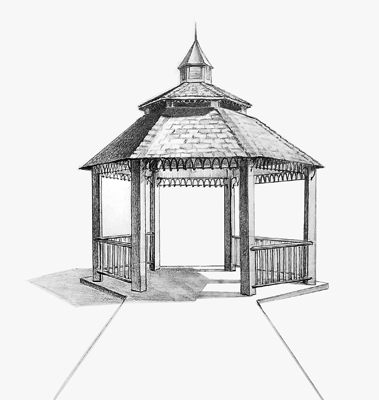
Perspective is such a powerful drawing tool that can truly elevate your artwork. It is the key to creating realistic and believable drawings. When we talk about perspective in drawing, we are referring to the understanding of how objects appear to the eye based on their spatial relationship and distance. By mastering perspective, you will be able to accurately depict three-dimensional objects on a two-dimensional surface. This skill is essential for artists of all levels and is a fundamental aspect of drawing.
Understanding how we see the world around us is crucial when it comes to drawing from observation. Perspective allows us to represent objects in space as they appear to us in real life. For example, when drawing a simple box, knowing how to apply one-point perspective will give the illusion of depth and volume. By grasping the concepts of vanishing points, horizon lines, and foreshortening, you can create drawings that are not only accurate but also visually engaging. Perspective provides a solid foundation for any artist, enabling them to confidently tackle complex subjects with ease.
Imagine being able to draw a bustling cityscape with towering skyscrapers receding into the distance, or a serene landscape with winding roads disappearing into the horizon. With a solid understanding of perspective, you can bring your drawings to life and invite viewers to step into your world. Remember, practice is key when it comes to mastering perspective. The more you work with it, the more natural it will become. So, embrace the power of perspective in your drawings, and witness how your art transforms and reaches new heights.
What You Will Learn
- The Architecture of Depth: Master the core mechanics of creating boxes in 1-point, 2-point, and 3-point perspective. - Navigating the Canvas: Learn to pinpoint the Horizon Line and accurately identify Vanishing Points.
- Curvilinear Logic: Explore the complexities of Elliptical and Spherical perspective.
- Dynamic Environments: Manage complexity by utilizing multiple sets of vanishing points within a single composition.
- Practical Application: Apply these theories to construct a simple architectural sketch of a house.
- Precision Scaling: Utilize Ground Lines and Transfer of Scale techniques to ensure perfect proportions in every piece.